Understanding the Basics: How It Works with Real-Life Examples
Key Considerations: In a Cost, Insurance, and Freight (CIF) agreement, the buyer takes on the responsibility for import expenses and final delivery once goods arrive at the designated port. If the cargo suffers damage during transit, the buyer must submit a claim to the seller’s insurance provider.
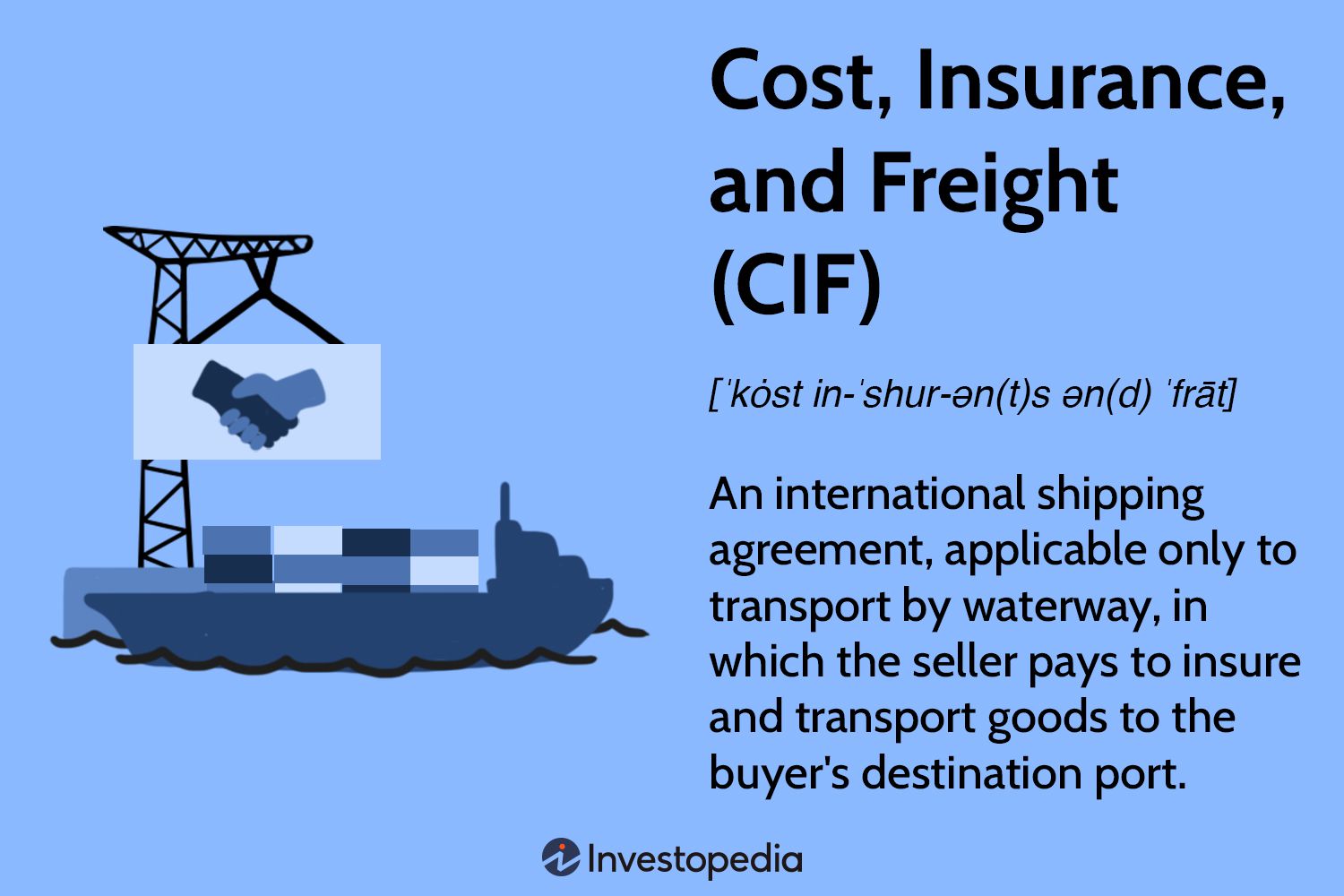
Key Considerations:
In a Cost, Insurance, and Freight (CIF) agreement, the buyer takes on the responsibility for import expenses and final delivery once goods arrive at the designated port. If the cargo suffers damage during transit, the buyer must submit a claim to the seller’s insurance provider. CIF is akin to Carriage and Insurance Paid To (CIP), although CIP applies to any transport mode, such as by truck or automobile.
What Is Cost, Insurance, and Freight (CIF)?
Cost, Insurance, and Freight (CIF) is a shipping arrangement where the seller is responsible for covering the costs, insurance, and freight associated with a buyer’s order transported over water. The risk of loss or damage transfers to the buyer when the goods are loaded onto the vessel, while the seller continues to handle insurance and freight costs.
How Cost, Insurance, and Freight (CIF) Functions
CIF contract terms clarify when the seller’s liability ends and when the buyer’s liability begins. CIF is exclusively applicable for international shipments over water.
The seller must pay for shipping costs to deliver goods to the buyer’s port, typically utilizing exporters with direct ship access. However, the buyer has specific responsibilities outlined below.
Seller’s Duties
Under CIF, the seller must:
- Obtain export licenses
- Conduct product inspections
- Cover shipping and loading fees to the seller’s port
- Deal with packaging costs for export
- Handle customs clearance, duties, and taxes for exporting
- Pay for sea or waterway freight from seller to buyer’s port
- Acquire insurance for shipment until it reaches buyer’s port
Buyer’s Responsibilities
Upon arrival of the goods at the destination port, the buyer is accountable for import-related costs, which include:
- Unloading charges at the terminal
- Transfers within the terminal and to the final delivery location
- Custom duties and related import charges
- Costs for transporting and delivering the goods to their final location
Risk Transfer
When shipping internationally, the risk and cost transfer points can vary based on the shipping agreement. With CIF, risk transfer occurs when goods are loaded, while cost transfer happens upon arrival at the buyer’s port. Although the seller must insure the goods, the buyer owns them once on the vessel and must file a claim if damaged during transit.
Conclusion
CIF is a shipping term that establishes the seller’s obligations for shipping costs, freight, and insurance for ocean or waterway transport. While the seller covers costs until the goods reach the buyer’s port, the buyer is responsible for expenses once the cargo arrives. Understanding CIF compared to similar terms, such as CFR and FOB, is crucial for buyers and sellers engaged in international trade.