Investigation Reveals Fire Truck’s Missing Equipment in LaGuardia Runway Incident
Aircraft maintenance workers arrive to inspect the wreckage of an Air Canada Express jet, Tuesday, March 24, 2026, just off the runway where it had collided with a Port Authority fire truck Sunday night at LaGuardia Airport in New York. (AP Photo/Yuki Iwamura) Investigation of Collision at LaGuardia
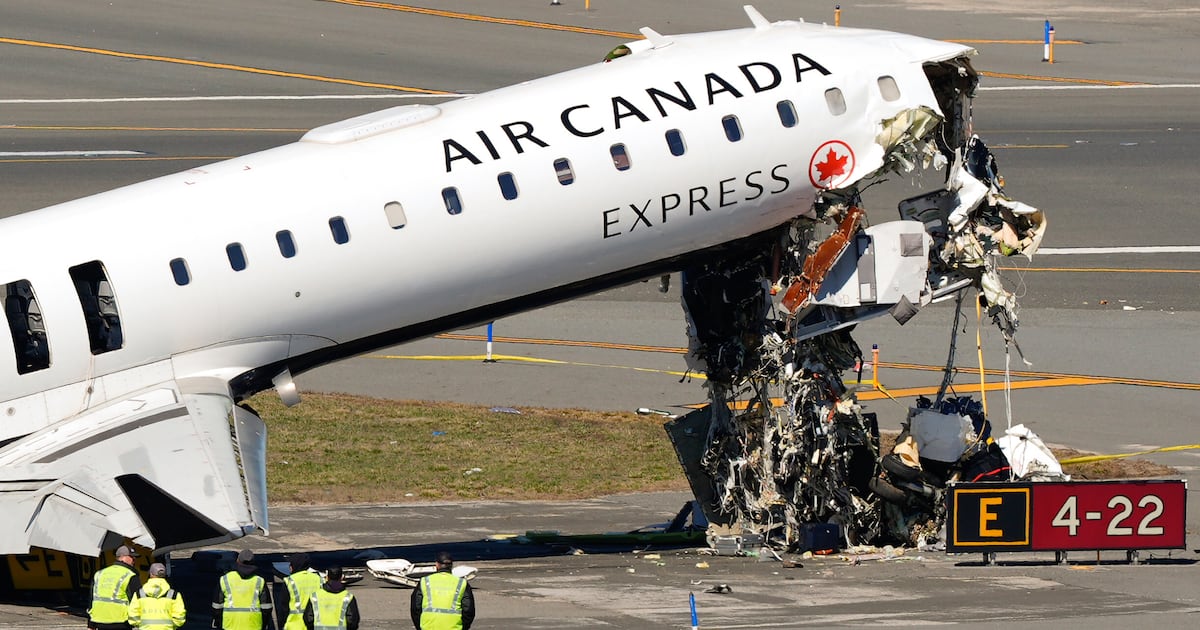
Aircraft maintenance workers arrive to inspect the wreckage of an Air Canada Express jet, Tuesday, March 24, 2026, just off the runway where it had collided with a Port Authority fire truck Sunday night at LaGuardia Airport in New York. (AP Photo/Yuki Iwamura)
Investigation of Collision at LaGuardia
NEW YORK — Federal investigators reported that a fire truck was cleared to cross a runway at LaGuardia Airport only 12 seconds before an Air Canada flight landed, resulting in a collision that claimed the lives of both pilots on March 24, 2026.
Reviewing Safety Procedures
The National Transportation Safety Board (NTSB) is examining how multiple safety measures failed, allowing the fire truck to be on the runway at the time of the incident.
Factors Under Investigation
Investigators are assessing if the common practice of having only two controllers during overnight shifts is sufficient, why the runway alert system failed to trigger an alarm, and whether the fire truck responded to last-minute commands to halt.
Details of the Incident
Several passengers aboard the Air Canada flight, which originated in Montreal, were injured when the plane collided with the fire truck. Fortunately, most passengers managed to escape, including a flight attendant who survived despite being thrown onto the tarmac.
Role of Air Traffic Controllers
In addition to the collision, the NTSB wants to learn more about the controllers’ responses during a concurrent emergency involving an outbound United Airlines flight. However, NTSB Chair Jennifer Homendy cautioned against placing blame solely on the controllers, stating that distractions in high-pressure environments are common.
Infrastructure and Technology Considerations
LaGuardia Airport employs an advanced surface surveillance system aimed at preventing runway incursions. However, the fire truck lacked a transponder, rendering the system ineffective during this incident. The NTSB has stated that while they haven’t yet recommended transponders for airport vehicles, such equipment should be standard for safety.
Final Moments Before the Collision
The NTSB outlined a timeline from the cockpit voice recorder indicating that 25 seconds prior to impact, the fire truck requested clearance to cross the runway. Only five seconds later, a controller granted permission, and shortly after, another command was issued to stop just seconds before the collision.